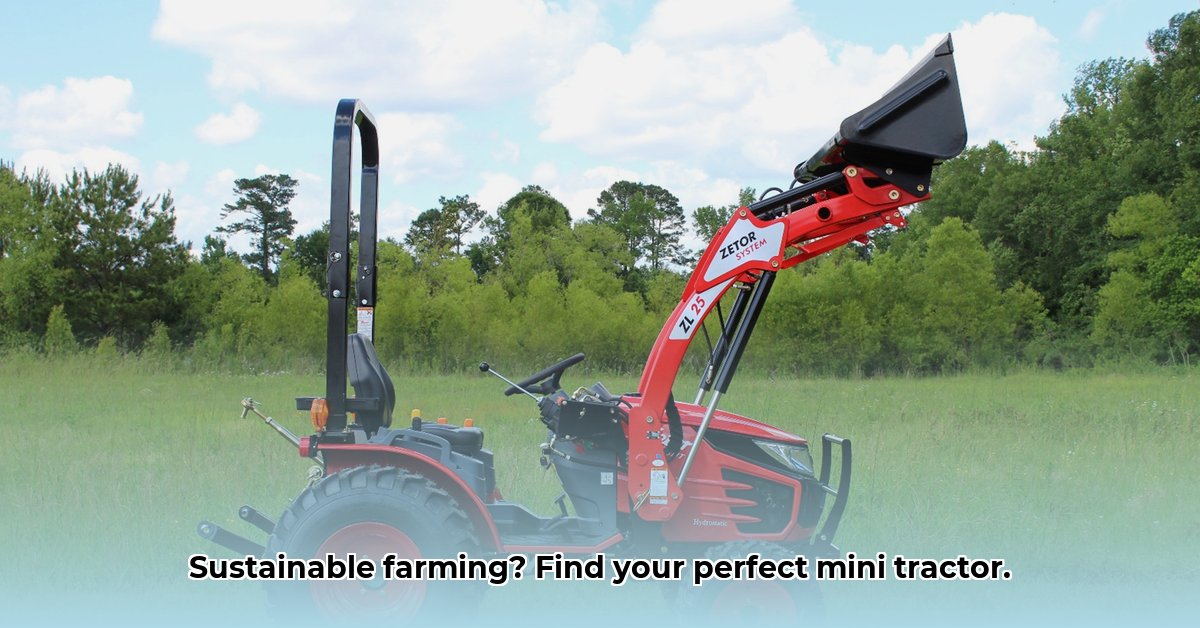
Choosing the right small loader tractor is crucial for sustainable farming. This comprehensive guide helps you navigate the process, focusing on finding a machine that's both productive and environmentally friendly. We'll cover everything from assessing your needs to understanding the long-term costs and minimizing your environmental impact. For more in-depth guidance, check out this helpful resource: Small Farm Tractor Guide.
Understanding Your Farming Operation: Matching Tractor to Needs
Before you start browsing, thoroughly assess your farming operation. This crucial step ensures you choose a tractor that perfectly fits your specific needs and budget, preventing costly mistakes and maximizing efficiency.
- Farm Size: How many acres do you cultivate? Smaller farms (under 10 acres) require different horsepower than larger ones (over 50 acres).
- Crops and Soil: What crops do you grow? Different crops require different tillage and harvesting methods. Soil type (clay, sandy, loamy) also influences horsepower requirements.
- Key Tasks: List all tasks you'll use the tractor for: tilling, planting, harvesting, spraying, hauling, etc. This directly impacts implement needs and horsepower.
- Budget: Establish a realistic budget. Consider not only the purchase price but also ongoing maintenance, fuel, repairs, and implement costs.
- Automation: GPS guidance systems enhance efficiency but add to the initial investment. Weigh the benefits against your budget and level of technological comfort.
- Horsepower: Determining the right horsepower is crucial. Insufficient horsepower leads to inefficiency while excessive power wastes resources. Consult with agricultural equipment specialists or experienced farmers in your region for personalized advice based on your soil, tasks, land area, and crops.
Essential Features for an Eco-Friendly Small Loader Tractor
Certain features significantly impact a tractor's environmental footprint and long-term cost-effectiveness. Prioritizing these features ensures sustainability across the tractor's lifetime.
Engine Type & Fuel Efficiency: While diesel engines dominate, alternative fuels like biodiesel are emerging. Fuel consumption data is often hard to find. Contact manufacturers directly to request detailed fuel efficiency information under varying operating conditions. Accurate data helps assess long-term fuel costs.
Transmission Type: Hydrostatic transmissions offer smooth, variable speed control ideal for precision work. Mechanical transmissions are simpler, often cheaper, but less precise, potentially impacting efficiency and fuel consumption. Consider task requirements and operator preference.
Implement Compatibility: Versatile implements reduce the need for multiple machines, minimizing costs and storage needs. Choose a tractor compatible with a broad range of attachments for various farming tasks. Assess the cost-effectiveness of each implement based on projected use.
Sustainability Features: Inquire about the use of recycled materials, low-emission engines, and fuel-efficient designs. Manufacturers might not readily provide this data; independent research may be required. Prioritize brands with established transparency and sustainability commitments.
Durability and Repairability: A durable, easily repairable tractor minimizes waste and reduces long-term costs. Access to parts and repair services is critical for extending the tractor's lifespan and minimizing downtime. Choose a tractor with widely available parts and a supportive dealer network.
Finding the Right Small Loader Tractor: A Practical Guide
This step-by-step guide streamlines the selection process, ensuring a confident and informed purchasing decision.
- Assess Your Needs: Thoroughly document your farming operation's requirements using the guidelines in Section 2.
- Research Tractor Models: Explore different manufacturers and models based on your needs. Use online resources and reviews, but prioritize direct manufacturer contact for detailed specifications and clarifications.
- Compare Specifications: Create a comparison table to objectively evaluate top contenders. Include horsepower, transmission type, fuel efficiency (if available), implement compatibility, price, warranty, parts availability, and any available sustainability data.
- Test Drive (If Possible): A test drive provides invaluable hands-on experience, allowing you to assess handling, responsiveness, and operator comfort.
- Seek Expert Advice: Consult experienced farmers, agricultural equipment dealers, or agricultural extension agents for unbiased insights tailored to your specific circumstances.
The Long Game: Long-Term Costs and Sustainable Practices
The initial purchase price is only a fraction of the total cost of ownership. A lifecycle cost analysis is crucial for making a truly sustainable decision.
- Initial Cost: This is the upfront purchase price, including any required attachments.
- Fuel Costs: Estimate annual fuel usage based on your projected operating hours and the manufacturer's fuel economy data. Consider fuel price volatility.
- Maintenance: Develop a comprehensive maintenance schedule based on the manufacturer's recommendations. Include costs for regular servicing, parts replacement, and potential repairs.
- Repair Costs: Estimate potential repair expenses based on the tractor's complexity and parts availability. Easy accessibility to parts and straightforward repairs minimizes downtime and expense.
- Resale Value: Consider the tractor's expected resale value after its working life. Some tractors retain their value better than others.
Resource Management and Optimization: Sustainable Farming Practices
Sustainable farming practices extend beyond equipment selection. Implement strategies that minimize environmental impact and maximize resource utilization.
- Precision Agriculture: GPS guidance and variable-rate technology optimize inputs (fertilizer, pesticides), reducing waste and costs.
- Crop Rotation: Rotating crops improves soil health, reducing the need for intensive tillage and minimizing fuel consumption.
- Soil Health Management: Practices like cover cropping and no-till farming improve soil structure, water retention, and nutrient cycling, further reducing the tractor's operational demands.
Conclusion: Make an Informed, Sustainable Choice
Selecting a small loader tractor is a significant long-term investment, impacting both your farm's productivity and environmental footprint. By evaluating individual needs, comparing models based on robust criteria, and prioritizing both immediate performance and long-term sustainability, you can make an informed decision that benefits your farm and the environment for years to come. Remember, thorough research, expert guidance, and a focus on lifecycle costs are key to making a truly sustainable choice.